InBody body composition
Get context for your weight. InBody uses bioelectrical impedance to estimate body composition, helping turn a single number into a more useful conversation.
Start with your height and weight.
More context. Better questions.
Explore what each result means, then compare the five regions on the body map.
Body fat mass & percentage
Examples use assumed body composition, not InBody measurements. Age, sex, and individual differences are not modeled. Printed optional fields depend on report settings.
See how your lean tissue is distributed.
Choose a region to explore the kind of detail on your report.
Front view · Your right appears on the left
Right arm
102% of reference
Compare with the left arm’s 6.0 lb and 99%. Small differences can occur; a difference alone does not diagnose an injury.
The weight is estimated lean tissue in that region. The percentage compares it with the report’s reference amount for supporting your body weight: 100% means it matches that reference, not that the region is 100% muscle. Regional values are not intended to add up to whole-body skeletal muscle mass.
All numbers are invented for explanation. The diagram highlights a region; its size and color do not represent measured muscle size. Lean tissue includes water and other non-fat tissue.
What brings you here?
Choose an example to prepare for your visit—not to determine which treatment you need.
Look at the wider pattern
Weight can stay similar while estimated fat and lean tissue change. Compare repeat tests under similar conditions alongside your activity and other relevant measures; do not assume every small shift is real.
“Which changes are large enough to interpret on this device?”
Establish a useful baseline
Discuss your training and goals before the first test. Muscle estimates are one source of information; actual strength, function, and recovery matter too.
“How can we use this report alongside my training performance?”
Check conditions before conclusions
Think about recent meals, exercise, hydration, and whether the same device and preparation were used. A surprising number is a prompt to review context rather than diagnose a problem.
“Could test conditions explain this difference, and should we repeat it?”
What an InBody assessment is
InBody estimates body composition rather than reporting weight alone. The report brings together fat mass, skeletal muscle estimates, body water, and the distribution of lean tissue across five body regions. It can be a useful starting point when your goal is to understand trends rather than chase a single scale number.
How bioelectrical impedance works
The device passes small electrical currents through body contacts and measures opposition to their flow. Body water and different tissues affect that measurement. The device uses these measurements and its calculation model to estimate composition; it does not look directly inside your body like an MRI.
What the numbers mean
Body fat mass is an estimated amount of fat; body fat percentage relates that amount to total weight. Skeletal muscle is a more specific category than lean or fat-free mass, which also includes water and other tissue. Segmental lean analysis compares the right arm, left arm, trunk, right leg, and left leg; it does not isolate individual muscles or measure strength.
Before testing
Mention pregnancy and implanted electronic devices. Follow the manufacturer’s instructions for the clinic’s model and the clinician’s advice. Bring previous reports if available and ask which measurements are useful for your goal, how much variation to expect, and when a repeat would be worthwhile.
Planning your visit & more details
Additional report fields
Estimated basal metabolic rate, visceral fat level, and whole-body phase angle add other perspectives. Printed optional fields can be configured. A visceral fat level is not a directly measured area in square centimeters, and total body water is not a detailed assessment of fluid balance. Ask the clinic to explain the fields on your actual report.
How it may help you
Someone beginning strength training may want to follow muscle estimates alongside weight. Someone changing nutrition may want to discuss preserving lean tissue. A report can support that conversation, but cannot by itself diagnose a nutritional problem, determine fitness, or tell you what your body should look like.
Why test conditions matter
Food, exercise, fluid shifts, and hydration can change impedance and the estimates. Follow the clinic’s preparation instructions and use similar conditions for repeats. Avoid deliberately dehydrating yourself to influence a result; consistency is more useful than chasing a better-looking number.
During the test
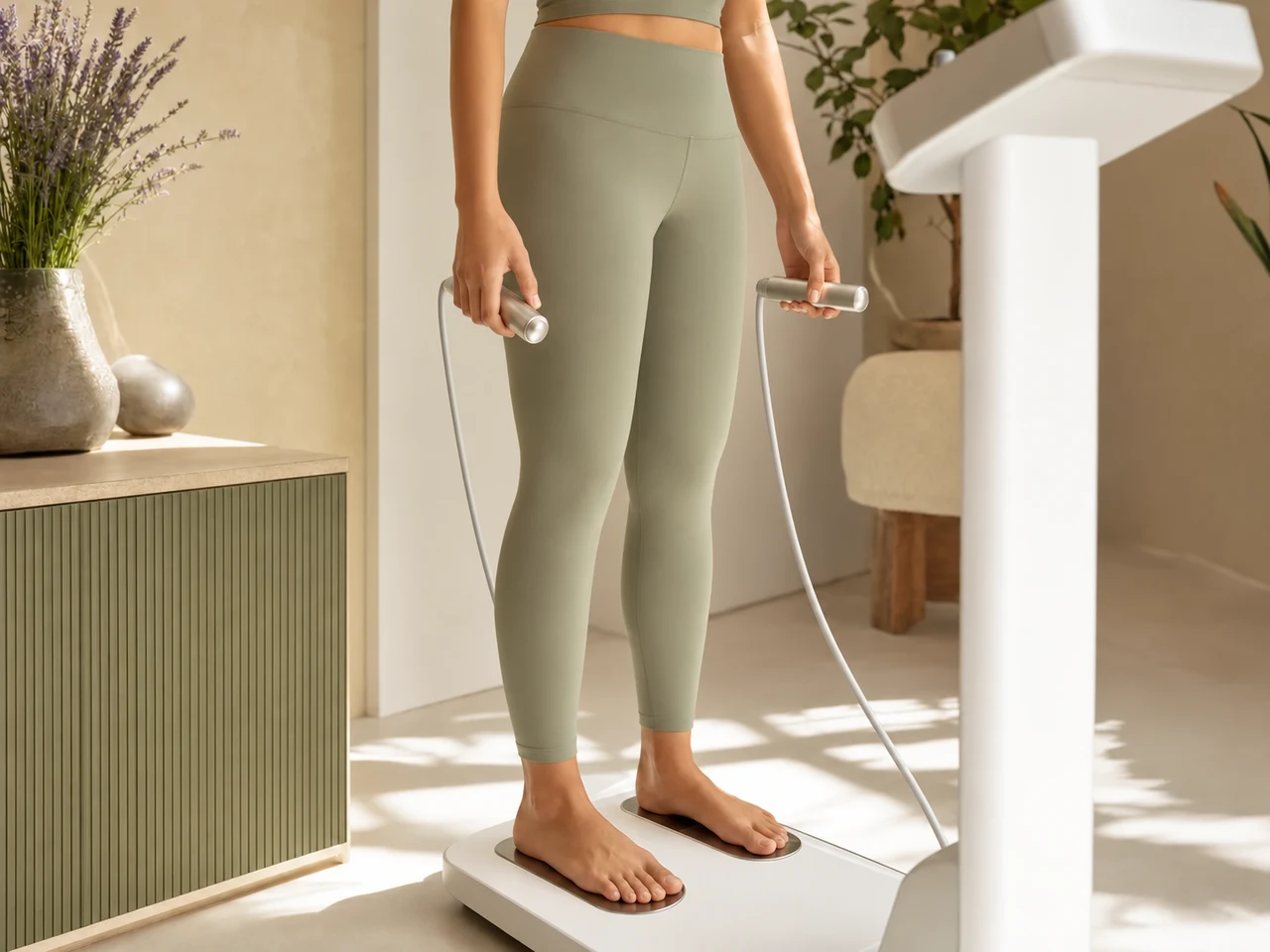
The operator can explain bare-hand and bare-foot contact, positioning, and what to remove. Ask for help if standing or maintaining contact is difficult. Follow the clinic’s preparation and screening instructions and ask which optional fields appear on your printed report.
Understanding the example explorer
The on-page explorer uses a fixed, invented adult sample report to explain the measurements. Select a field or one of the five body regions to see what it means. These numbers are not your results, healthy reference ranges, or predictions. A regional percentage compares lean tissue with the report’s reference amount; it does not mean a region is that percentage muscle.
What a trend can and cannot tell you
A change measured under similar conditions can prompt useful questions about training, eating, and recovery. Small differences may reflect measurement variation. InBody cannot prove that a specific treatment caused a change, and whole-body estimates are different from local EMSCULPT study measurements.
Your questions, answered.
Does it measure body fat perfectly?
No. InBody provides estimates based on impedance and its measurement model. Conditions such as hydration can shift readings.
Does lean mass mean the same thing as muscle?
No. Lean or fat-free mass includes more than skeletal muscle. Read each field by its own definition.
Can it show where I carry muscle?
Yes. Segmental lean analysis estimates lean tissue in your right arm, left arm, trunk, right leg, and left leg. It helps compare distribution and left-right balance. Lean tissue includes water and other non-fat tissue; it is not an isolated measurement of individual muscles or strength.
Is the sample below my result?
No. The explorer uses invented educational numbers. Your report is reviewed separately with the clinic.