Medical cupping
A familiar traditional practice, with space to slow down. Explore cupping as part of an individual conversation about comfort, movement, and care.
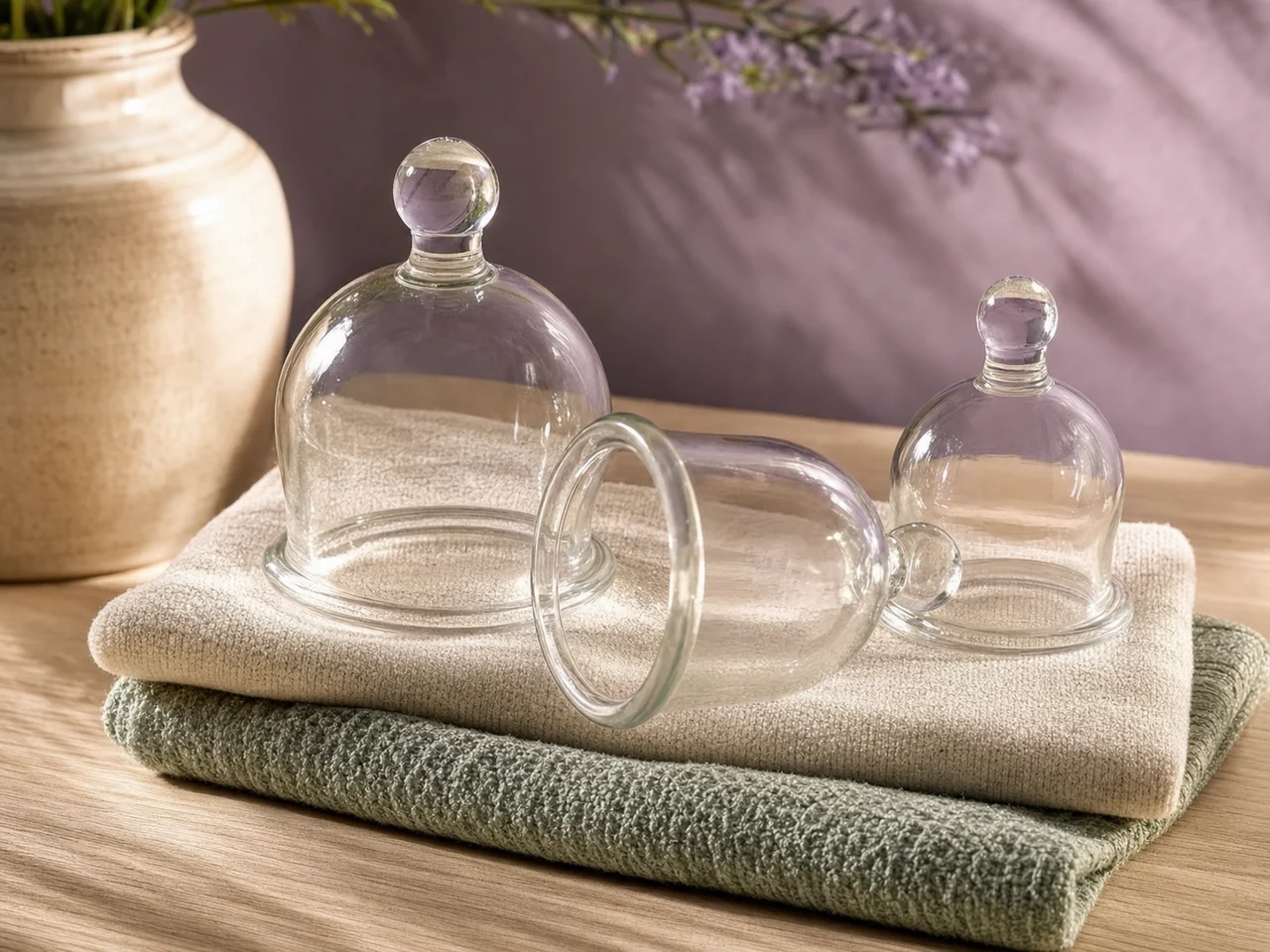
Suction lifts superficial tissue.
Seal
A cup meets the skin and creates a pressure difference.
Lift
Skin is drawn upward; a pulling sensation is expected.
Observe
Assess comfort and skin response, not mark darkness.
What brings you here?
Choose an example to prepare for your visit—not to determine which treatment you need.
Talk about movement
Show which movement feels restricted and whether there was an injury. Cupping may be explored for comfort, with limited evidence; changes in marks alone do not establish benefit.
“Could we compare the same movement before and after the session?”
Plan around visible marks
Circular marks may remain after treatment. Their duration varies, so do not schedule on the assumption that your skin will look unchanged the next day.
“Where would cups be placed and how might marks affect my plans?”
Screen the skin first
Mention easy bruising, adhesives or oil reactions, skin conditions, and blood thinners. The clinician may recommend another approach if suction is a poor fit.
“Is my skin suitable for suction, and what alternative would you suggest?”
What cupping is
Cupping places cups on the skin to create suction. Unlike massage, which generally applies pressure inward, a cup pulls the skin upward. Cups may stay in place or move over an area. Dr. Kari selects the placement and technique around your treatment goals and comfort.
What happens at the skin
A pressure difference draws superficial tissue into the cup and can produce small-vessel leakage that leaves circular marks. This mechanical effect can change local sensation. It does not show that toxins have been removed or identify the cause of pain.
What people seek it for
People often ask about cupping for muscular discomfort or a feeling of tightness. Some studies suggest pain relief, but much of the research is low quality. It is reasonable to discuss short-term comfort as a goal while keeping expectations about lasting benefit modest.
Marks and recovery
Marks may remain after the session and can matter if you have an event, sport, or clothing preference. Their color is not a treatment score. Ask for aftercare specific to the technique rather than assuming you need aggressive massage or another session to clear them.
When extra caution is needed
Discuss fragile or injured skin, eczema or psoriasis in the treatment area, reduced sensation, bleeding conditions, and blood-thinning medicines before treatment. Discuss the proposed technique and expected skin changes with Dr. Kari. Depending on the technique, risks can include burns, persistent discoloration, scarring, or infection. Follow the aftercare advice for your session.
Planning your visit & more details
How it might fit your situation
If tightness makes turning, reaching, or relaxing uncomfortable, describe the exact movement. A useful plan can compare comfort and movement before and after treatment. Cupping is not a substitute for assessing a new injury, persistent weakness, or unexplained pain.
During the appointment
Expect a pulling sensation. Pressure should be discussed and adjusted if uncomfortable. Ask where cups will be placed, whether oil is used, whether the technique involves heat, and how long marks may remain. Tell the practitioner immediately about burning or sharp pain.
Deciding whether to repeat it
Look for a worthwhile change in the activity that matters to you and how long that change lasts. If the benefit is brief or absent, review the plan and other options. Ask whether cupping is available on its own or as part of an acupuncture appointment.
Your questions, answered.
Will the marks disappear immediately?
Usually not. Ask how long marks may last with the technique being used and plan around activities where your skin will be visible.
Is it the same as massage?
No. Cupping uses suction; massage typically uses direct pressure. Your preferences and health history help guide the choice.