MPS pain & scar release
Focused care for comfort and movement. Start with a conversation about what fits you.
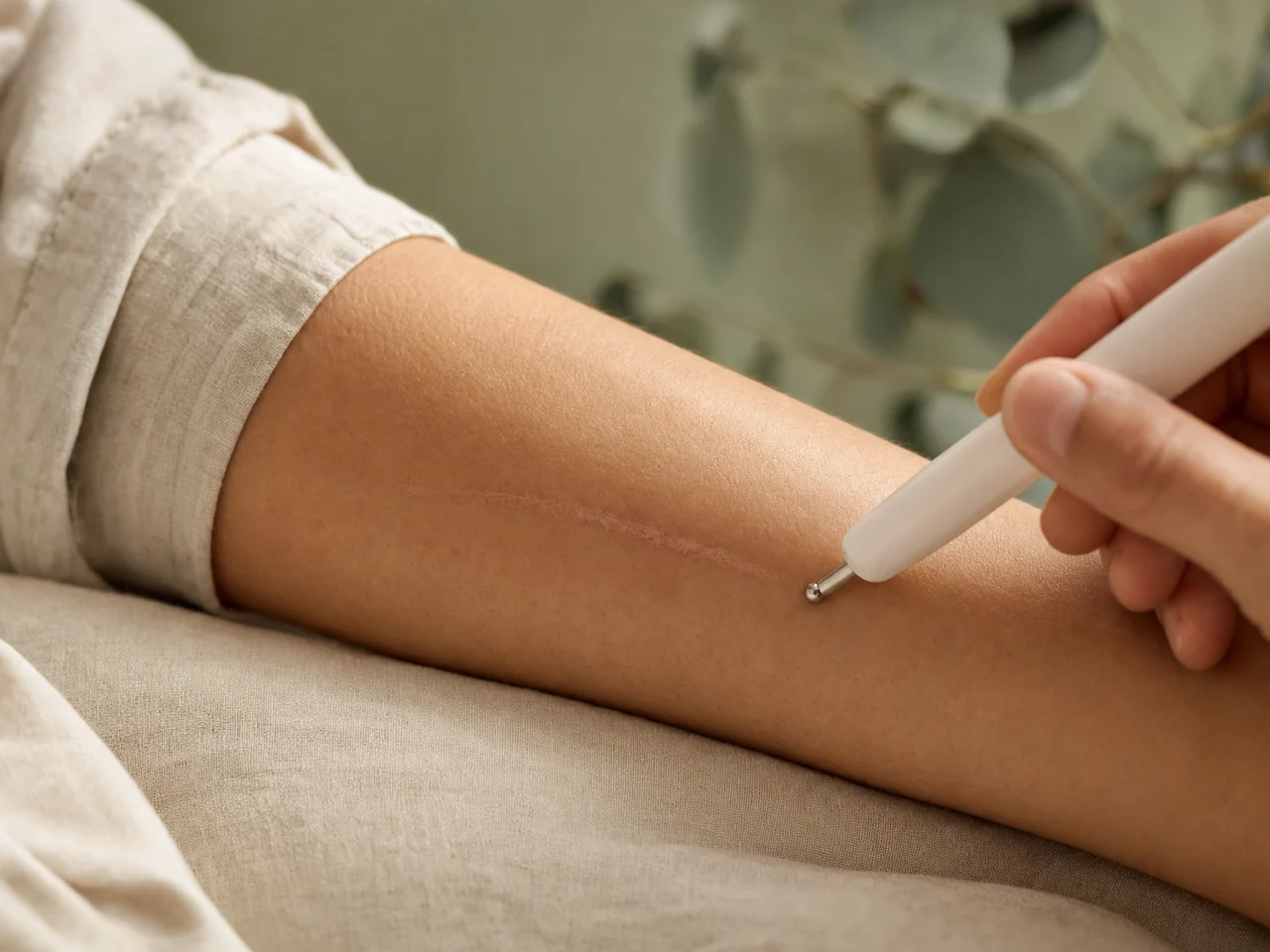
Small electrical stimulation at selected points.
Assess
Review the healed tissue and symptom history.
Stimulate
A device contacts selected skin points.
Compare
Follow a meaningful comfort or movement goal.
What brings you here?
Choose an example to prepare for your visit—not to determine which treatment you need.
Bring your surgical history
Describe the original operation, healing history, and the discomfort or movement you would like help with. Discuss readiness for treatment and any advice from your surgical team.
“Is the scar ready for this approach, and do we need my surgeon’s input?”
Choose a practical goal
If a healed area is uncomfortable with light contact, describe the sensation and whether it is changing. Discuss the sensation and its cause with Dr. Kari before treatment.
“Could we follow comfort with the same clothing contact over time?”
Healing comes first
An unhealed incision or new worsening symptom needs the surgical team’s advice. Do not start a scar-release session on the assumption that earlier is better.
“When is scar treatment appropriate for my procedure and healing status?”
What MPS stands for
Microcurrent Point Stimulation uses a handheld device to apply low-level electrical stimulation at selected skin points. Dr. Kari offers MPS Pain and Scar Release with an assessment of your symptoms, healed tissue, and movement goals before selecting a treatment approach.
How the technique is described
The approach uses small electrical stimulation at selected skin points, including points around healed scars. Discuss the contact areas, proposed protocol, and sensations with Dr. Kari before treatment. Electrical stimulation differs from manual scar massage and needle injection.
What it may be considered for
People may seek help with discomfort around a healed scar, sensitivity, or a pulling sensation during movement. Begin with the history of the scar and an assessment of the surrounding area so the session can be considered in context.
Who needs additional screening
Mention implanted electronic devices, pregnancy, skin damage, altered sensation, recent surgery, and active infection. Device-specific contraindications and surgical clearance matter. Do not apply a scar protocol to an unhealed incision without appropriate clearance.
Planning your visit & more details
Setting a practical goal
A useful goal might be more comfortable clothing contact or easier movement. Evidence for this specific scar protocol is limited; treatment does not guarantee that a scar will disappear or internal adhesions will be removed. Discuss the expected benefit and review point with Dr. Kari.
Bring the story of the scar
Mention the surgery or injury, date, healing complications, any implanted material, sensation changes, and what now bothers you. Bring relevant surgical advice. A new, open, red, draining, or worsening scar should be evaluated rather than treated as routine scar tightness.
What a session may involve
The practitioner examines the area, explains where the device will contact skin, and reviews the sensation you may notice. Tell Dr. Kari about discomfort or areas with reduced sensation, and speak up if you would like the session paused or adjusted.
Following your progress
Together, we choose a repeatable observation, such as comfort with a waistband or a particular movement, and a time to review your response. Your consultation covers pricing and how MPS fits with rehabilitation, conventional scar care, or other treatment.
Your questions, answered.
How does this fit my appointment?
We plan your visit around your goals and explain how this service fits with acupuncture or other care before you begin.
What will we discuss before treatment?
Your consultation covers the technique, expected experience, evidence, relevant risks, and alternatives, with time for your questions.